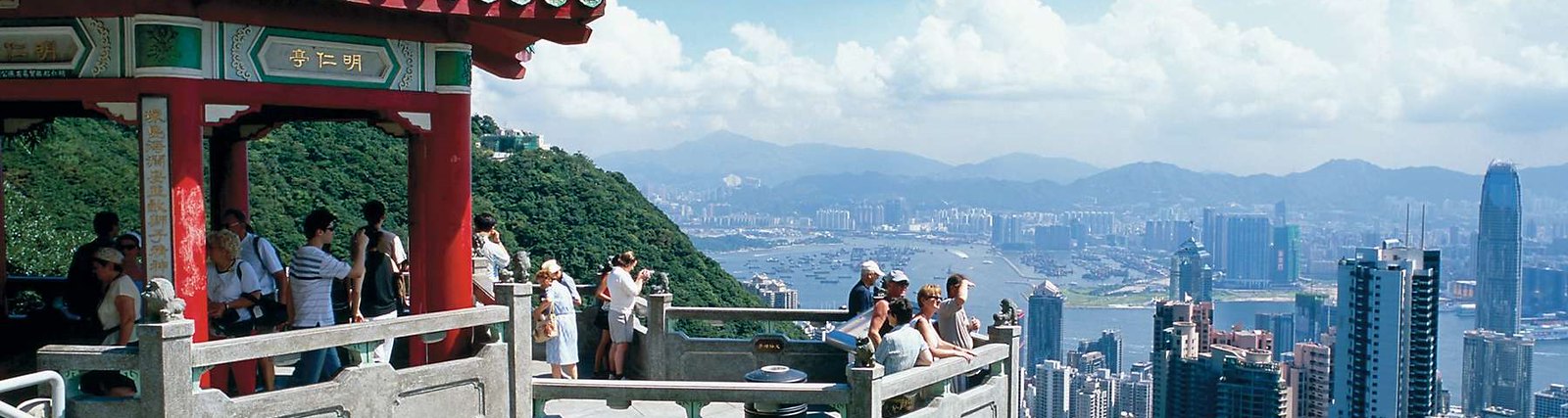
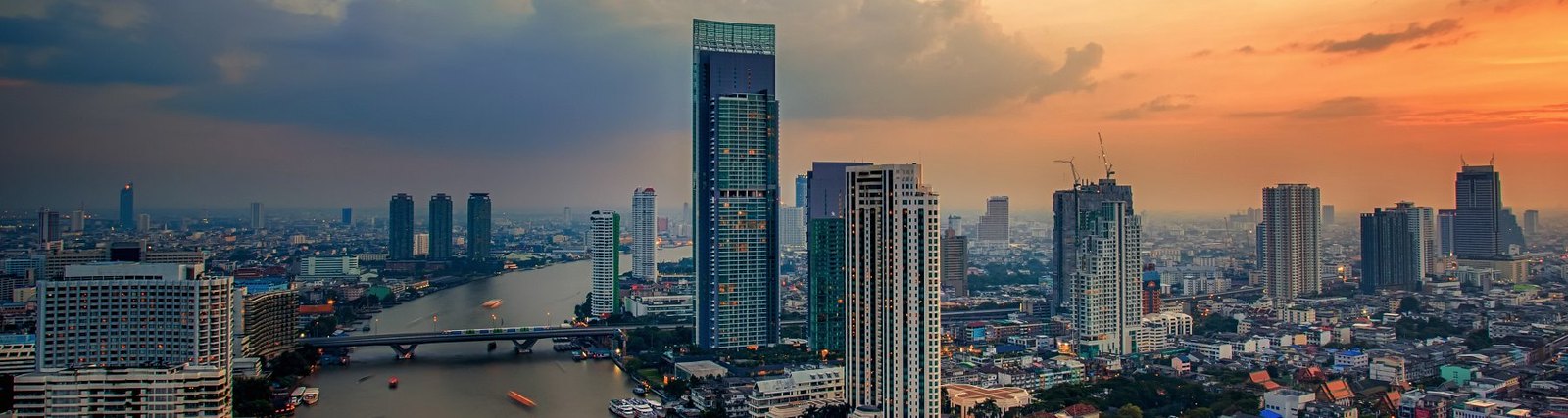
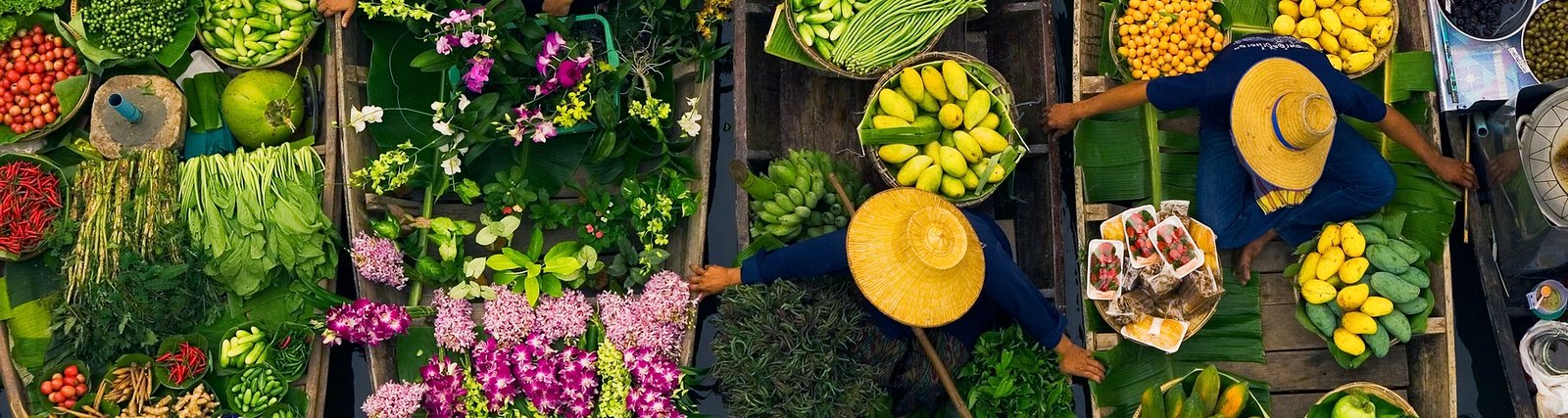
Angkor Wat Gate of Angkor Thom Sunset at Angkor Wat Kai Island, Phuket Hong Kong Bangkok City Floating Market, Bangkok
Showing posts with label Toursim Attraction. Show all posts

Monday, March 7, 2016

Unknown

The Grand Palace in Bangkok


If there is one must-see sight that no visit to Bangkok would be complete without, it's the dazzling, spectacular Grand Palace, undoubtedly the city's most famous landmark. Built in 1782 - and for 150 years the home of the Thai King, the Royal court and the administrative seat of government - the Grand Palace of Bangkok is a grand old dame indeed, that continues to have visitors in awe with its beautiful architecture and intricate detail, all of which is a proud salute to the creativity and craftsmanship of Thai people. Within its walls were also the Thai war ministry, state departments, and even the mint. Today, the complex remains the spiritual heart of the Thai Kingdom.

Within the palace complex are several impressive buildings including Wat Phra Kaew (Temple of the Emerald Buddha), which contains the small, very famous and greatly revered Emerald Buddha that dates back to the 14th century.

The robes on the Buddha are changed with the seasons by HM The King of Thailand, and forms an important ritual in the Buddhist calendar. Thai Kings stopped living in the palace around the turn of the twentieth century, but the palace complex is still used to mark all kinds of other ceremonial and auspicious happenings.

Grand Palace Layout and Orientation
The palace complex, like the rest of Ratanakosin Island, is laid very similar to the palaces of Ayutthaya, the glorious former capital of Siam which was raided by the Burmese. The Outer Court, near the entrance, used to house government departments in which the King was directly involved, such as civil administration, the army and the treasury. The Temple of the Emerald Buddha is located in one corner of this outer court. The Central Court is where the residence of the King and halls used for conducting state business were located. Only two of the throne halls are open to the public, but you'll be able to marvel at the exquisite detail on the facades of these impressive structures.

The Inner Court is where the King's royal consorts and daughters lived. The Inner Court was like a small city entirely populated by women and boys under the age of puberty. Even though no royalty currently reside in the inner court, it is still completely closed off to the public. Despite the proximity of the Grand Palace and Wat Phra Kaew, there's a distinct contrast in style between the very Thai Temple of the Emerald Buddha and the more European inspired design of the Grand Palace (the roof being the main exception). Other highlights are Boromabiman Hall and Amarinda Hall, the original residence of King Rama I and the Hall of Justice.

Royal Reception Halls
Nowadays its impressive interior is used for important ceremonial occasions like coronations. It also contains the antique throne, used before the Western style one presently in use. Visitors are allowed inside the spacious European style reception room or Grand Palace Hall (Chakri Maha Prasat). Then there's the impressive Dusit Hall, rated as perhaps the finest architectural building in this style, and a museum that has information on the restoration of the Grand Palace, scale models and numerous Buddha images.

Important Note about the Grand Palace
A strict dress code applies. The Grand Palace with The Temple of the Emerald Buddha is Thailand's most sacred site. Visitors must be properly dressed before being allowed entry to the temple. Men must wear long pants and shirts with sleeves (no tank tops. If you're wearing sandals or flip-flops you must wear socks (in other words, no bare feet.) Women must be similarly modestly dressed. No see-through clothes, bare shoulders, etc. If you show up at the front gate improperly dressed, there is a booth near the entrance that can provide clothes to cover you up properly (a deposit is required).

About Wat Phra Kaew
Wat Phra Kaew or the Temple of the Emerald Buddha (officially known as Wat Phra Sri Rattana Satsadaram) is regarded as the most important Buddhist temple in Thailand. Located in the historic centre of Bangkok, within the grounds of the Grand Palace, it enshrines Phra Kaew Morakot (the Emerald Buddha), the highly revered Buddha image meticulously carved from a single block of jade. The Emerald Buddha (Phra Putta Maha Mani Ratana Patimakorn) is a Buddha image in the meditating position in the style of the Lanna school of the north, dating from the 15th century AD.

The Grand Palace
Opening Hours: Daily 08:30 - 15:30
Location: Na Phra Lan Road, Old City (Rattanakosin)
Price Range: Tickets sold from 8:30 - 15:30 and cost 500 baht! One ticket includes entry to Vimanmek Palace and Abhisek Dusit Throne Hall.
Read More
Unknown

10 Things You Can See in Phuket

Phang Nga Bay Cave
Far be it from us to tell you what to do in Phuket but there are some gems that you really should not miss out on seeing while on your visit here, and we don't mean the kind sold at the jewelers…

Phuket's great advantage is that there's always something to do on and off the island, whether it's raining or shining. From the sublime to the seemingly profane, the range of activities and places to visit is remarkable for a destination of this size. Here are our Top Ten 'Must See' choices, built on popular vote. If you only get through half of these destinations you'll have had an unforgettable holiday. Go for it.

1. Phang Nga Bay
Phang Nga Bay is unique. A day out here is an unforgettable experience that will definitely get you thinking. A distinctive feature of the bay is the sheer limestone cliffs that jut vertically out of the emerald-green waters. These islands are home to sheltered fauna that are possible to observe on certain tours. James Bond Island and Koh Panyee are just two of the more famous spots in this bay.

2. Old Phuket Town
Sino-Portuguese splendours and funky shops in the most unlikely places will surprise and delight you in the heart of Phuket's sleepy provincial capital. Phuket town offers much more than you think with some excellent restaurants and local sights. The unique blend of colonial and Chinese architecture along with a tangible quaintness makes for a fascinating and unforgettable afternoon spent sauntering around Phuket's Old Town. Expect the unexpected and don't forget your camera.

3.  Bangla Road Nightlife
There are few things in this world to prepare you for an after-dark stroll down Patong's Bangla Road. However, a sense of humour and an open mind are prerequisites if you're looking to have some fun. In fact, there's only one undeniable and obvious fact about Bangla – it's nothing like home. With its lady boys, exotic girls, enchanted westerners (mostly male) and enough extroverts to fill a Disney cast of thousands, shopping or sipping on a beer at Bangla Road at night is a definite 'Dear Diary' moment.

4. Big Buddha
Visible from most of the south of Phuket, the Big Buddha is a recent arrival to the island. The image stands on the top of the Nakkerd Hills and looks down over Chalong, Kata and Rawai. It cost 30 million baht to construct and is 45 meters high. Next to it stands a smaller, golden image that is actually made of brass and there is a shrine near the site's car park. The drive up to the Big Buddha takes you through the 'real' Thailand and the view from the top is enhanced if you take a map to identify the many, many sights.

5. Wat Chalong and Phuket Temples
Wat Chalong is one of Phuket's most important temples and visited by thousands each year. It's beautifully decorated with infinite reflections from hundreds of tiny glass pieces and several pagodas. On special holidays Wat Chalong hosts 'country fairs' with a real local flavor where you can buy just about anything and snack on Thai food to your heart's content. Wat Chalong has an interesting history and is Phuket Island's spiritual center. You haven't seen Phuket if you've never visited this fascinating temple. 

6. Simon Cabaret Show
Simon Cabaret - probably the biggest transvestite cabaret show to be found locally. This show features a spectacular musical floor show performed by the world famous lady boys of Simon Cabaret. See for yourself - guys, can you tell the difference? And ladies - wouldn't you just die for a figure like that? Fabulous costumes, glitzy and fun.

7. Spend a Day (or two) on Phi Phi Island
Phi Phi Island is Thailand's island-superstar. It's been in the movies. It's the topic of conversation for travelers all over Thailand. For some, it's the only reason to touchdown in Phuket. Even with all the hype, it doesn't disappoint. Phi Phi's beauty is a large chunk of the allure. The islands, when approached by boat, rise from the sea like a fortress. Sheer cliffs tower overhead, then give way to beach-fronted jungle. It's love at first sight. 

8. Phuket FantaSea Show
It's wacky but fun and very professionally done. Trapeze artists, elephants on stage and pyrotechnics combine in a Las Vegas-style show. You'll see nothing else like it anywhere on the planet. Combining Thai traditional myths with humor, fantasy and a loose plot line that keeps getting more and more amusing, FantaSea's extravaganza is a highly entertaining and riveting show that deserves to be top of our Top Ten Must See and Do in Phuket list.

9. Phuket Viewpoints
There are many viewpoints looking out over east and west Phuket affording sunrise as well as sunset views. OK, so everyone goes to Promthep but it doesn't make it any less spectacular. There, you'll get fabulous views over the ocean stretching as far as Phi Phi Island on a good day. Check out Phuket's other viewpoints such as the 'Three Beaches' hilltop venue on the road between Nai Harn and Kata or sip a cocktail at the After Beach Bar (also on the same road) while the golden ball slips into the western horizon.

10. Thai Boxing (Muay Thai)
Rapidly gaining popularity all over the world, Muay Thai is an electrifying spectacle to watch. Visit Saphan Hin Stadium in Phuket City to see regular matches with well-trained martial arts experts. Or try Patong Beach, where you can also see the skill and dexterity of these super-fit fighters. Tradition and courtesy are at the heart of this dangerous contact sport and a good Muay Thai participant is ultra-disciplined in spirit as well as body. Join the spectators and feel the rush. to see regular matches with well-trained martial arts experts. 


Read More

Sunday, March 6, 2016

Unknown

Hon Khoi Salt Fields


The Hon Khoi Salt Fields is one of the most unique tourist destinations in Nha Trang, where mounds of natural salt are manually harvested from shallow fields along Doc Let Beach. Salt production is a thriving industry in Nha Trang due to Vietnam's extensive coastline, generating about 737,000 tonnes every year.

The best time to visit Hon Khoi Salt Fields are between the months of January and June, when the summer climate (with temperatures that can go as high as 40°C) allows for the salt to be directed from the East Sea to the fields. It is then left there to evaporate for about 10 days before it is collected in wicker baskets, each weighing up to 10 kilograms.

Unlike most salt fields in Vietnam, the strenuous task of tending to Hon Khoi Salt Fields is carried out by middle-aged women which takes place between 04:00 and 09:00. To protect themselves from the heat and salt, these salt workers wear conical hats, rubber gloves and boots, as well as face masks. While conditions are harsh during these months, they are very approachable and friendly even though they can only speak in their native language.

Hon Khoi Salt Fields are also popular spots for photography, where you can capture great views of the salt mountains and workers carrying heavy baskets across the fields well as a pagoda that sits atop a nearby hill. The fields are accessible within an hour’s drive from city center, though there are many full-day excursions where you can also visit other significant landmarks in Nha Trang.

As it is a working industry in Nha Trang, visitors shouldn't expect tourist facilities in Hon Khoi Salt Fields, but it is still a culturally rich experience to see the locals working throughout the early morning.

Opening Hours: Daily 04:00 – 09:00
Location: Northern Nha Trang
Read More
Unknown

Ba Ho Waterfalls


Ba Ho Waterfalls is one of Nha Trang’s must-visit attractions, comprised of three natural waterfalls that ends with a clear lake surrounded by a dense rain forest. Situated about 20 kilometers north of Nha Trang, the waterfalls are a favorite spot for hiking, swimming, picnics, and fishing.

The waterfalls have been left in their natural state, for the most part, with several arrow pointers and cement steps set along the more challenging routes. Locally known as Suoi Ba Ho (three-pool stream in Vietnamese), the entrance fee to the waterfalls is priced at VND 20,000 per person.

From the entrance, it is a 30-minute walk through the foliage to the first waterfall before it becomes a challenging climb over large rocks to reach the second and third waterfalls. Make sure you are reasonably fit, wear proper shoes, and/or bring extra clothes before making your way here.

Ba Ho Waterfalls is a 40-minute drive from Nha Trang City, with picturesque stretches of coastlines and paddy fields throughout the journey. There are also several stalls set up by the roadside, where you can purchase beers, soft drinks, and local snacks. While renting a motorcycle is possible, we advise against travelling solo as flat tyres are common mishaps due to the rather bumpy roads along the way.
 
Alternatively, you can opt for a full-day tour from Nha Trang City, where an English-speaking guide takes you to prominent attractions in northern Nha Trang, including Ba Ho Waterfalls, Monkey Island, and Doc Let Beach. Great for adventurous travelers and nature lovers, Ba Ho Waterfalls makes for a tranquil retreat away from Nha Trang city center.

Opening Hours: Daily 06:00 – 18:00
Address: Ninh Ich, Ninh Hoa district, Nha Trang
Read More
Unknown

Thap Ba Hot Springs Centre


Thap Ba Hot Springs Center is a great place to relax and rejuvenate after a day of exploring Nha Trang. Great for a temporary retreat away from the bustling city, the hot springs center is set against a mountain backdrop with plenty of greenery and flowers. It is also fitted with private and shared mud-baths, herbal-bath, Jacuzzi, waterfall, swimming pool, and sauna.

Locals believe that the natural hot mineral springs help detoxify and soothe fatigued muscles, remove dead skin cells, and supply minerals to the body. Meanwhile mineral mud is said to contain antiseptic properties which is used as a facial mask to treat acne and revitalize the skin.

Thap Ba Hot Springs Centre offers a variety of services and treatment packages at different price levels. Costing VND 150,000 for adults and VND 70,000 for children below 12 years old, a basic mud bath package comprises of a 15-minute mineral mud bath in the communal pool, a 30-minute soak in naturally hot mineral water, followed by a hydrotherapy session using warm or cool mineral water.

If you’re willing to splurge for privacy and luxury, Thap Ba Hot Springs Centre has 14 VIP rooms that are fitted with indoor mineral water bathtubs, swimming pools, Jacuzzis, and inclusive of body massages, acupuncture therapy, and beauty services. Priced between VND 2.5 million and VND 5 million, the packages are inclusive of swimming attire, towels, snacks, water, fruits, ginger jams, and souvenirs.

Accessible within a 15-minute drive from Nha Trang City, Thap Ba Hot Springs Centre can get very crowded with locals and tourists alike, so the best time of day to visit is between 12:00 and 15:00.

Opening Hours: Daily 07:00 – 19:00
Address: 15 Ngoc Son Street, Ngoc Hiep, Nha Trang
Tel: +8458 383 5345
Read More
Unknown

National Oceanographic Museum of Vietnam


The National Oceanographic Museum of Vietnam offers interesting exhibits of local marine life, including over 20,000 live and preserved marine specimens. Open to public since 1922, the institute also sponsors ongoing research and community projects, such as captive breeding programmed, preservation and regeneration of local coral reefs.

The collection of this museum is so extensive that it spans two floors within a French colonial building in Cau Da (a few kilometers south of Nha Trang town center). The ground floor houses glass tanks of various sizes filled with marine life such as reef sharks, turtles, scorpion fish, anemones, puffers, and lion fish as well as coral reefs and seaweed from many parts of the world. For clarification, each tank is also labelled with the name, origin, and characteristics in Vietnamese and English.

Meanwhile, the upper floor of The National Oceanographic Museum of Vietnam features thousands of preserved specimens, animal skeletons, local boats, and fishing artifacts. One of the highlights of the museum is the skeleton of a humpback whale, which was excavated in the Ha Nam Province back in 1994. The specimen measures at 18 meters in length and 18,000kg in weight. Also on display here is the skeleton of a dugong that was excavated in Con Dao back in 1997.

Visitors can also enjoy several themed exhibitions of the institute’s development in research equipment and technology as well as rooms that illustrate natural disasters, sacred legends and traditions, and fishing culture in Vietnam.

Accessible within a 10-minute drive from Tran Phu Beach, entry fee to The National Oceanographic Museum of Vietnam is priced at VND 30,000 for adults and VND 12,000 for children below the age of 12.

Opening Hours: Daily 06:00 – 18:00
Address: 1 Cau da, Nha Trang, Khanh Hoa
Tel: +8458 359 0036

Read More